Showing posts with label pop culture. Show all posts

Tuesday, 12 April 2016

I believe my troubles and your troubles shook hands

Ok, best few weeks in studio - endless endless aesthetic party time - been getting super messy and in the zone and going into the studio with my headphones on and forgetting where I am for hours on end and forgetting to eat even, and getting all wired on coffee cos I can't bear to tear myself away from the paints, inks, glitter, paper and fabric for more then a second. So much fun!

I've been trying really hard to summarise my social and environmental agenda recently, without going into excessive detail - because i'd never sleep if i tried to embark on that path! I find twitter is good for this because of the word limit, and if I had a smart phone i'd use instagram for the same reason.
But anyway here is my twitter: https://twitter.com/PhillyHunt1 and some recent tweets that may provoke research or thought:

I'm soon releasing a new imaginary album called 'From my denim coffin': a white girl attempt to understand the & its cultural history
*
Songs also explore cultural / environmental / human rights impacts of denim culture & rock'n'roll too, & associated

*

new msg from Bruce: i know he's got sway by being The Boss but shows pop culture (& withdrawal of) spreads messages

*

character in my doom/ awareness/ exhib: Molly from Linfen. go 2 for more info on Linfen


*

my film about the risk of idealism & cultural blindness in relation to environment & society...


*


I've also been getting really into my creative self without trying to simmer down my instincts for worry of political correctness or ability to communicate very important social and environmental issues in great detail. I realised that was making me feel constantly a bit crap and like I was underperforming and not making any headway because I was getting so bogged down in how to perfectly express and communicate my position on certain issues such as complexities between racism and climate poverty.
So now i'm looking at different ways, or perhaps additional ways, to unpack social and environmental truths which can run alongside my visual art practice. So i'm all for making my art super aesthetic, but full of references which can be explored in little or great detail, and which can still provoke ideas and thoughts on issues, but which can be taken lightly so as not to scare too many people off. Slowly slowly catchy monkey is my new motto - don't push my own opinions too hard to patronize people through my artwork, but get them enjoying it on surface level, and provide an option to explore further if they want to. My visual practice will be an entry point to other things - writing, podcasts, zine/s, clothing and maybe some music playlists, which will frame certain issues and explore them more fully for any viewer who wishes to do that.
I also like the idea of maybe one day someone buying a piece of my art cos they like it visually, and maybe not knowing as they hang it on their wall that it is full of references and pointers to a certain issues or moment in cultural history. Then maybe one day they will get one of those references and look into the subject!


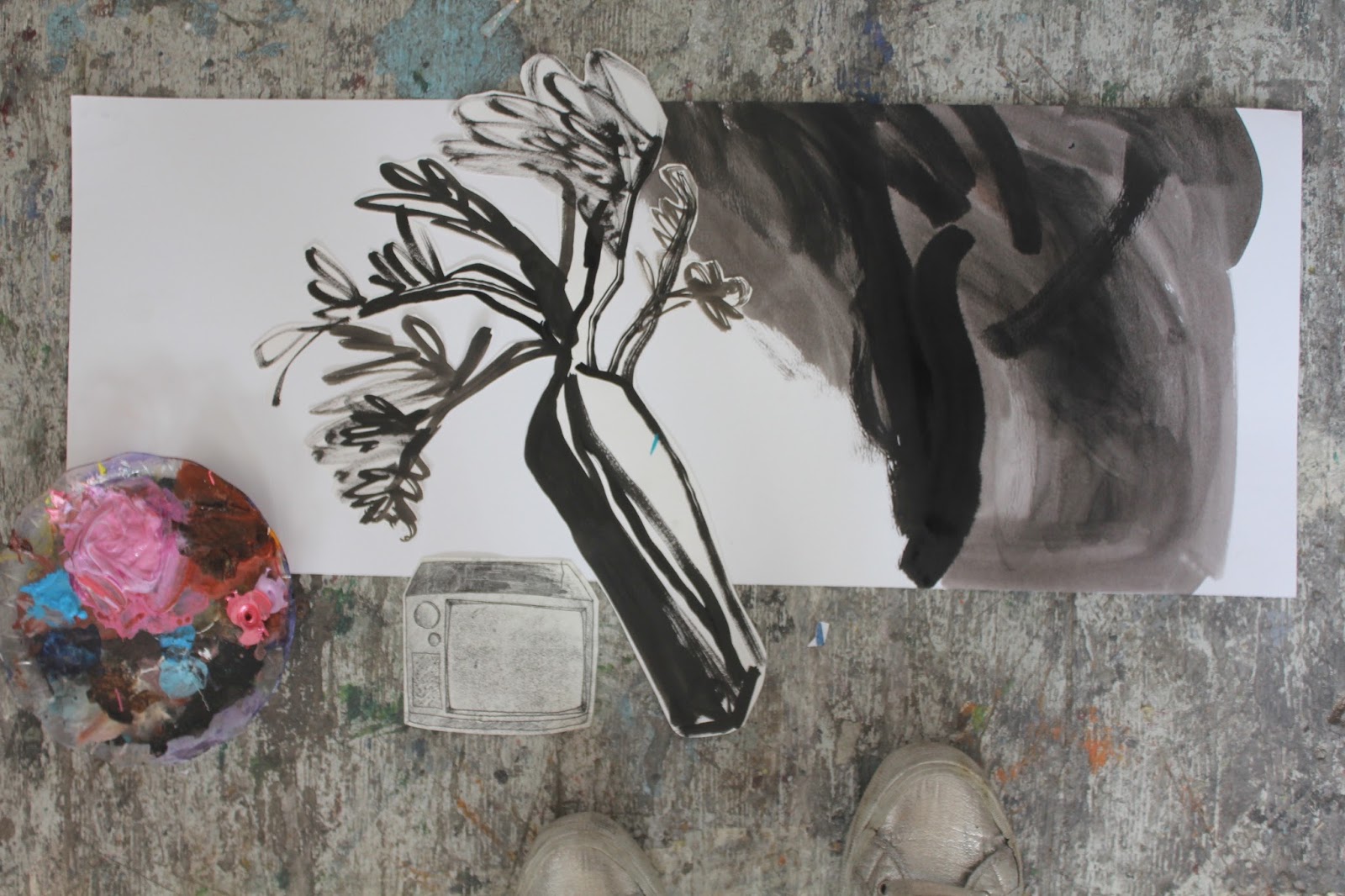


photo i took from a few years ago - but i love it! lush colours and composition and blocking i think,


This whole plan for myself to enjoy the aesthetic and emotional side of my art more sort of came from all the music i've been listening to recently while I work which I will cover now, because it's so important to my vibe:
These are just a few videos to intro y'all to some of my favourite albums by the artists:


I just love Matthew Ryan, I think he's the only musician i've been a tireless fan of, considering I first heard him in 2005 or 2006, and have always been amazed by him. Here he is guesting on Drunken Lullabies podcast in which he is just so eternally inspiring, this episode is a very recent one from March this year. He comes in mainly at around 46 mins. There's a lot of beer chat in this episode, so skip to Matthew's bit, and listen to the rest, there's some good chat as well about Paul Westerberg (from The Replacements) and more of my fave musicians.
Matthew Ryan has done tours where he's played at people's houses - I also think that is so cool and has powerful potential for curating and putting on socially engaged gig series with no compromises on sponsorship, mixed messages or transport of equipment.

p.s It is not lost on me that these are all white men from the land of punk and rock, but I can't help my taste - I'm not into politically excavating my taste, I just like what I like and that's that. It helps that they wear some brilliant denim.
Also I realise I say y'all too much.

And last weekend I saw Jared Hart, and Brian Fallon and the Crowes live in Camden and I just nearly passed out it was so brilliant. I seriously wonder why people even need or want to take drugs when they go out, when they could just go see some amazing live music, i've been on a high ever since.
Also I met a Canadian guy in the crowd and we became gig buddies for the night and it's just so cool that music, and especially live music, can make people drop their guard and be so friendly and open and instantly you can get into really intense and fanatical conversation because you're both into the same music. So cool! Pop music = social glue. I'm the new Emile Durkheim, but instead of being a theologian i'm a pop-culture-oligian!?
And one artist whose show I saw recently in Bath at the Museum of East Asian Art who really has an incredible atmospheric vibe and technical excellence in her work is Wu-Lan Chiann. She is a Taiwanese printmaker and ink painter who is just amazing, please look her up. Her use of shadow, light and time of day is so amazing.
Oh, and the 6th episode of Season 5 of 'Girls' which came on TV recently was just so filmic and brilliant and that had strong vibes for me.
I've been doing heaps of reading about Cult TV again and now realising i'm not going to fight my TV admiration - I barely watch much TV but when I do I love it. I think TV, when used properly, is super powerful for engagement and activism.

Anyway, I wanna show y'all everything i've been making in the studio but saving it for surprises at my show in June at The Peckham Pelican.
Also a super cool magazine that looks at art, culture and climate change asked to print one of my projects in their new issue and interviewed me about it, and about what I think culture and art can do for climate change. Watch this space...

And here is a little round up of other things that have been interesting me the last two weeks:

Theaster Gates: An artist form Chicago. His approach to art and not waiting around for people to pay you attention and listen, but to just create your own opportunities and platform for saying and doing what you want to. When I worked for Mexican artist Pedro Reyes on his project 'Sanatorium' at the Whitechapel Gallery, Theaster Gates was exhibiting next to us in the same room but I never got to meet him :(


Absolutely brilliant article which talks about the portrayal of indigenous poverty and living situations by the media, and mistrust of journalists. Links to an amazing journalism story the Washington Post that tries to address these issues.

A bittersweet story of the piano angel man of Edmonton.

And this is an article, which I fear may be directed at people like me, as i'm not of ethnic minority, living in poverty, or a member any other marginalised demographic. Unless you count being a girl or having red hair. Which I don't personally find to be affecting my enjoyment of life, apart from the odd ridiculous comment on the street. The only slight marginal demographic I have ever sat in that has had a big and lasting effect on my enjoyment of life is that i've suffered/suffer with a mental health issue, which I have experienced to a very disruptive but not necessarily very dangerous point.
But as i've said before, please don't eliminate me from spreading some good word just because I'm white/living in a house I pay for myself/employed/British/went to a good school/from a good home etc. I can at least provide an access point for people as fortunate as myself onto issues affecting less fortunate people and communities, because I have direct social contacts with people like me.
But yes - I know I don't know the half of how crap life is for so many people, and yes I know I can't speak for people and situations I have no experience of.

I am actually planning a little interactive piece for my show in June which will lightly touch on the idea that too many of us shy away from upsetting or demanding or tricky situations that might threaten to topple our own smooth (or not!) lives and minds. It will also frame me as someone who cares about stuff but maybe doesn't have the scope of experience to be capable of naturally feeling enough urgency to actively and tirelessly push for a realistic solution. Warning: It will be a bit self-deprecating and I realise that may come across as trying to warrant pity or encouragement from others in a crumby/trendy art show that I paid for with money from my easy jobs (I'm a cleaner, nanny and art technician). But so be it - haters gonna hate.
The piece will be sort of inspired by selfies ;)
So cliche huh. Love a good pop culture cliche for getting the crowds assembled!

Wednesday, 9 March 2016

Soap operas (AGAIN!!!) and cult TV

Soap Operas and Cult TV shows are circular economies, if you will.
Part of some TV show’s ‘cultness’ is that they are open to ongoing aesthetic analysis as their history lengthens, and thus they are a reflection of people. Often they have collective audiences to enjoy experiencing and responding to the shows together, whether they sit together in the same room to watch them, or are part of a fan club of sorts, of simply enjoy the idea that others around the country or the world are all sitting down at the same time to watch the same show.
Fans of these shows feedback actively (buy memorabilia, endlessly drop quotes into conversation, take life lessons from them, make fan art/zines etc, re-watch and re-watch) and so the legacy of the TV show plays on its audience’s participation. It’s a feedback loop.
Let me say that again – the legacy depends on our feedback, or our response.
Now think of that in relation to planet earth.
The legacy of planet earth depends on our feedback into it… the way we inhabit our environment. Our response to it.
So the way we engage with cult TV shows and soap operas is a familiar behavioural process, and can offer an insight into a very similar behavioural process that ought to employ in our daily life in the environments of planet earth.
It’s a reciprocal, adaptive process.

The vision of people engaging in cult TV/soap operas can serve up a visual motif around which to construct a social message (possible even political) about care for the environment.
There is a social and psychological agenda in the assembled visuals within and surrounding a TV show. If dissected and analysed, those visuals can bring up a rallying cry of seductive social options for us. We are now presented with the assembled symbolic visuals of our social options. Soap operas are particularly good at this because they are ongoing and situated in everyday scenarios.

As part of my ‘film’ I will include a soap opera which all the characters are a fan of. 
They will gather nightly under the baobab tree in the still heat of the desert twilight to watch it together. They will all hum the theme tune as the opening credits begin.
One of them drinks from her fan mug that had a cheesy picture of three of the soap opera’s characters emblazoned on it. One of them will continually quote familiar turns of phrase that they have come to hear regularly from one of the soap operas longest-running characters. This is twenty minutes of peaceful escapism for them at the end of each day.

Soap worlds are small, concentrated, local in audience mentality but also in content, people become obsessed, or then they’ve never heard of them! It’s a personal attachment and small scene. A local scale. Supportive and caring. Like a small-holding farm. They are sequential and cotton onto real life, and are there for you and keep going. Their broadcasting pattern is that of a serial, sustainable, small-dose one. They are open-ended. This is good as a metaphor for living locally and sustainably on earth.
Soaps are also super accessible and hold a special place in so many peoples’ timelines even if they claim to dislike them. Many of us remember watching them with a parent or grandparent as a child, idealising alongside older generations, all feeling their own on-screen counterpart’s resonance, and all learning. Soaps are familiar - a shared experience, nothing new, nothing risky, nothing uncomfortable or high-brow or demanding.
Soaps have a kind of ‘all under one roof’ vibe; there is something for everyone. They summarise and tie in family and community so easily. This is a vibe of care and sustainable relations; that which we ought to carry through into our environmental lives on earth.

And soap characters test the limits of personal human pomp, expansion and delusion safely, while keeping it all at arms length, and to act as a warning to us all.
But they can also demonstrate perfection in such wonderful light that we may feel ever more seduced, if it weren’t for the episodic trundling and thus predictable flaws of downfall, ruts and demise (and rebirth) of all characters depicted. Perfection is always saturated and counteracted in soap opera, making them all the more safe a viewing experience for out egos, and thus society and the planet.
As Pauline Kael said in her review of the film 'Funny Girl';
"In life, fantastically gifted people, people who are driven, can be too much to handle; they can be a pain. In plays, in opera, they're divine, and on the screen, where they can be seen in their perfection, and where we're even safer from them, they're more divine."

The aim of the soap opera as a decipherable motif in my ‘film’ is to mobilise a personal response in the viewing process and to invite thought. It will act as a sub-text, to be imaginatively extended by the viewers of my ‘film’ (which will be depicted through freeze-frame paintings, prints and drawings, some of which will include written elements in the form of dialogue or quotes, set direction or credits/opening sequences). The soap opera’s location and plot will not be evidently revealed, but will simply exist in a place-less place. This is because a place-less place-ness can be more relatable and subjective, allowing itself to be accessed through a viewer’s personal experience. Perhaps some attention will divert to the context of the artist (me) and the soap opera’s subjective scenarios can play on an inter-textuality with my other work – which is often about our place in the environment, and the power of imagination in learning to behave towards the planet (and our dreams/ambitions). Perhaps I can even rely further on inter-textuality made available to me by famous films or moments of environmental precarity/disaster/salvation such as Exxon Valdez.

An instance where a soap opera is used inside a film is the film ‘Joy’ (2016), where Russell creates a fanciful element to the film by using the ongoing viewing of a soap opera to mirror the ups and downs of the actual film’s main character. (the director)

Overall my ‘film’ and its soap opera ought to function as an immediate signifier experience (possibly embodied experience if senses can be appealed to, which I think I can do!) experience, which one will be invited to deconstruct. This invitation to delve for further meaning can be achieved by many means, namely using cinematic devices in the images to suggest continuing/preceding events outside of the frame, in order to get the viewer’s imagination to work. It can also be achieved by withholding one element of an otherwise full picture, or by offering a strong beginning of a narrative in an otherwise abstract image.

The audience will have to work, and will know that I have some sort of agenda.
It can be a dialectic experience, as indeed is every assemblage of characters in a soap opera or film.

*

Passion in cinema:

I also simply want to pay homage to the way cinema-going offers a reflection on our own lives and also an escape from it, so I will use the cinema setting/stage set and film techniques (subtitles, doubling, layering, multiple view points, panning, screen dimensions, lighting and colour, soundtrack etc) to allude to the persuasive power of cinema.

Passionate cinema is when you experience one of two things:
1.     You feel so strongly, and the feeling lingers after you leave the cinema/film ends. You feel you need to call a certain person, do a certain thing, have everyone leave you alone so you can ride the feeling out.
2.     You have a strong sensory journey, but the message/meaning/results is ambiguous and you need someone else to see it, either to help you understand, or for you to be able to ‘own’ that moment you don’t understand or are scared by in your showing it to someone else; your ‘knowing’ of it.

In an interview at the BFI Viggo Mortensen quotes another actor (it isn’t quite clear whom) on what makes a film epic…
- “I want people to wake up in the middle of the night and think that everything they are doing is wrong”.
That feeling of needing to enrich or change your life is amazing.
Drive is such a seductive quality in humans.
If a film can reinvigorate your own drive, then the world would be full of interesting, driven, accomplished, independent, free-thinking people. How wonderful.

***

Anyway here's some recent studio work in progress stuff/ 
Themes:
Film opening title sequence / monument to endangered species / blind monk seals of Hawaii / archipelagos / radio power / soap operas (clearly) / pop fashion trends / technology fascinates but obstructs our mobility and proactivity: - we become inert.


p.s listen to the podcast Pop Culture Salvage Expeditions - find it on itunes or on the link. Great resource for artist activists, and of course via the theme of my beloved pop culture!

p.p.s Listen to Brian Fallon's debut solo album 'Painkillers' when it's out on Friday 11th March on Island Records. I feel emotional just reading this review of it by Craig Manning on absolutepunk.net

p.p.s It's Country2Country music festival this coming weekend in London and Glasgow, which i'm going to, so if ya fancy some country pop then listen to Kip Moore, Eric Church's new album, Hannah Aldridge and generally catch up on Bob Harris's Country show on Radio 2. Especially this episode with Thomas Rhett in session, he's great in convo with Bob and super interesting in his writing process.

Oh and I updated my artists statement recently, it was a bit waffley before....


Friday, 26 February 2016

Cultural appreciation or appropriation...

Ok, see what you think of what i've been making a start with for some new visuals... then read on. All these images were made before I did all the research below.


The 'with thanks to...' list features the cultures and people who were most exploited or appropriated by Colonialism, or who have most shaped the roots of our modern pop music.

This work in progress is part of an ironic title sequence that places me and other UK audiences in a place of self-awareness when we hanker after exotic faraway lives and cultures. It is supposed to bring about a sense of awareness about where out pop culture pastiche world that we gain such enjoyment and commerce in is made up of many other cultural roots, some of which have been totally abused and undermined for us to have access to them. I mention this in my post about the Artist and Empire show at the Tate Britain.
Oh and this piece is also supposed to kind of take the mick out of a lot of contemporary art in which people blindly use symbolism and imagery from tropical lands and cultures (and pot plants, euggghhh so redundant!). Which, for the reason of unaware cultural appropriation I get annoyed about - the art these young contemporary artists holds (more often than not) no sway with me because it's simply so  self-indulgent and self-referential. It doesn't have to be - if due respect were paid to the origins of this imagery, through some crediting or conceptual message.

Before mindless appropriation with no reference to roots took place (which happens now due to a time lapse - we no longer consider the exotic to be a new discovery, although it is still a sort of novelty) there was rude and patronising direct referencing and appropriation of native people and 'exotic' cultures - see a still from the film title sequence below:


So i've been working more on creating imagery that represents my film's characters and narrative and scenario, BUT i've been showing them (the beginnings of them) to Dom and he pointed out that it may not be all that obvious to the general viewer that I am in fact calling out the cultural appropriation of indigenous cultures and of climate poverty scenarios.
It may not be clear enough that I am condemning such practices, and that I am aiming to raise awareness of how so much of our entertainment, culture and lifestyle here in the UK (and in other first world nations and demographies) comes out of Colonialism. For example, Disney appropriating Tigerlilly in Peter Pan, or D-Squared2's 'DSquaw' fashion collection).
I may not be being clear enough that it is ok to be inspired by other cultures and other lifestyles but you MUST not steal their autonomy by taking their ideas, cultures, property, designs or words, and re-contextualising them of claiming them as your own.

So I need to think about HOW I will put my film (the visuals that represent it - paintings, text pieces, zines etc) across more clearly, so that they act as an access point and a trigger for thought, and a frame in which the viewer is held responsible for ensuring they address the legacy of Colonialism, both in terms of human and indigenous rights, in terms of climate poverty, and in terms of environmental awareness.

***One thing I keep forgetting, is that I want a personal emotional aspect to this project. My plan for this was to represent some ways in which individuals or communities deal with disappointment or pain; coping mechanisms. A few coping mechanisms I came up with, that are familiar to myself, are: humour, ridiculing oneself or others, sarcasm, intelligent undermining of someone who has been lured into a false sense of security. 
Now i'm not saying I do all of these! Don't worry I won't attempt to undermine or expose my friends to make myself feel better. But people do do this to their enemies. Sometimes rightly so?
Anyway - the coping mechanisms listed above all come under the Post-modern categories of irony, pastiche, parody and appropriation.
So i thought: perhaps I could apply those approaches to my film; some of the characters may exhibit such coping mechanisms, or be ironic. Some of the locations or scenarios may be invented as a pastiche or parody of something.
I thought this also fitted well with my decision to use a lot of pop culture references in my film, as pop as a genre is simply an accessible collage (pastiche) of other cultural elements.
And of course pop culture (films, entertainment, music, fashion, art, leisure pursuits) has a history of totally undermining indigenous rights and humans rights for the sake of the pop product.
p.s please read the article that the above link will take you to - it's a coherent explanation of my whole creative conundrum!

So, back to thinking about how to be more clear with my message and intentions for my 'film':
I've been reading articles, watching videos, and trawling through twitter in the past week to try and recognise the feelings that indigenous people and climate poverty victims have towards the rest of the world accessing their cultures and stories. I'm trying to see what the message is, what works and what doesn't, and how the message in certain pop products relates for different audiences:

Firstly: Beyonce's new video 'Formation' which is set in post-Katrina New Orleans and has some relatively shocking imagery of a very recent tragic event, which I'm sure didn't go down well with people who were directly affected by the hurricane. Indeed I was right as I found in the article by Maris Jones: 'Dear Beyonce, Katrina is not your story to tell' where she speaks of the trauma Beyonce's video revisited. You can read more by Maris here in her article: Post-Katrina Stress Disorder: Climate Change and Mental Health. Maris however does say she appreciates the black pride and power that Beyonce is exhibiting and promoting. So it seems Beyonce has her politics and racial pride in order, but not her geopolitical/geocultural approach.

Interestingly, my sister who is a Beyonce fan (this is actually the first Beyonce video i've ever watched!) said, when I asked her what she thought the video represented and meant, was that it was violent and maybe encourages gun culture. She may be right; in regards of a white girl from the West Midlands where we don't see guns or violence! Whatever feelings Beyonce's video provokes, those feelings can't be argued against. But the fact is that the guns in the Formation video are being held be heavily armed police, which Maris Jones says is conveying the increased militarisation of police in areas with a large black contingency. My sister, nor I, would ever have thought of this because that issue is so far outside our scope of experience. So - there is it, proof that I have to be VERY clear with my message so that the due respect is paid to the correct sources of my artwork.
My sister had no thought about the climate and emotional issues tied up with the Katrina scenario in Beyonce's video and the trauma it may have bought to the surface for many viewers. But that's Beyonce's (or her video team's) fault, because it should have been blindingly obvious.

There's also the potential for the floods in New Orleans to be considered as having be made into something darkly glamourous, as discussed in this article The Reductive Seduction of Other Peoples' Problems by Courtney Martin.

Here's the video:


And some stills of the bits I have mentioned in my visuals or research.

The militarised police

Creole Cowboys are a culture I learned about a few months back and found to be an interesting kind of hybrid culture: a pop culture in itself if you will. But I haven't done too much research on them yet besides watching a short documentary on Creole Cowboys culture below. But I decided they are included in the print i'm making (shown at top of post).

Here's that little film about the Creole Cowboy culture: Click the link here


Ghetto (to quote Beyonce) scene


Cultural pride

For further research on the 'Formation' video's cultural message, and how that varies, watch these two videos, one is 10 mins, one is an hour.

Cultural References & Critique of Beyonce's Formation by SmartBrownGirl:


"Beyonce has no responsibility in...directly educating you... that's not her function as a musician and entertainer. But Beyonce used her music and her platform to spark a very important conversation." That conversation as  I interpret it, in this girls' eyes, to be one about the non-monolith status if black cultures, and of exclusion from certain efforts such as #blacklivesmatter based on when or where one is born and raised.
Read the comments on this video on YouTube, more enlightenment.

Professor Griff speaks on Beyonce, Cultural Appropriation, and The Global African Presence:


Another example of pop culture appropriating native cultures with a perhaps careless approach and insensitivity is 'Hymn for the weekend' by Coldplay and Beyonce. This video is discussed here by Sundal Roy:


It's interesting that she says, "you need how to pick your battles, because this isn't one of them."
I think Sundal is concerned that the fight for racial equality is being saturated and slowed by people creating a fuss around cultural instances that may be either may appreciation rather than appropriation, or that may simply be so subtle and minor that most people won't detect anything inappropriate going on, therefore it would be better to concentrate on a more directly offensive or inconsiderate instance.
I agree with Sundal because I do not think this video is deliberately ignoring or misrepresenting a traumatic event or situation. In my eyes it is not subsuming Indian culture. However I have never been to India and am not Indian so I'll have to take Sundal's word for it.
Beyonce does appear to wearing make-up that is trying to make her look more Indian, but personally i'm not sure that's an issue. After all, we all got the idea for eye make up from the Ancient Egyptians; Rimmel and Maybelline cashed in on that way before these globals conversations were happening and nobody seems to have pulled them up on that. Nor on the film The Revenant in which Leo D sleeps inside his dead horse. Which did happen, as I read in Dee Brown's historical account of pre Civil War America from an indigenous perspective: 'Bury my heart at Wounded Knee.'.

Here's the video itself:


___

As for Canadian fashion design duo D-Squared2's line 'DSquaw' - I was wary when I heard this story that the designers may have offended by not paying homage or respect by stealing native American cultural elements to their own gain. Which indeed they did. However I did not realise that the issue was more complex than that until I watched the video in this article, that the word Squaw is derogatory, and that it was also the fact that the designers had not employed native craftspeople do co-design or create or even consulted them.

___


Another concern is how easy it is for me to hold rural, fringe lifestyles and cultures where ancestral traditions and spiritualism are upheld in an idyllic light, because I live in the opposite culture: modern metropolis. So I need to shock myself out of this mindset and remind myself that it's often not a choice to be so marginalised:
By reading articles such as this one by Duane Champagne.

___

Today I listened to a podcast with Ryan McMahon (4th one down in this page) who founded Indian and Cowboy media organisation, which is a podcast network for indigenous people. He says podcasting is great because it is autonomous: you can make them at home for next to nothing and there are no publishing restrictions/censoring.
He mentioned three podcasts that Indian and Cowboy are making which interested me a lot:
One is about the appropriation of indigenous culture in pop songs - literally my exact interest area!!!
Another was about the Powwow tradition, an aim of which was to examine the traditional sexual and physical abuse that goes on at powwows. I think it's important that while people respect each others' cultural practices, we mustn't be afraid to address plain human rights abuse that goes on there.
The third was called Stories from the Land which is community storytelling, inviting listeners to speak.
I'm not sure that the first two have been made yet; I think they are in production.

So to sum up:
If you are inspired (as I am) by others' lifestyles, locations, spirits etc, then be sure to pay obvious respect to them. Do not decontextualise or undermine the autonomy of other cultures or the seriousness of their practices.
Label such appropriation as inappropriate somehow, perhaps by turning the lens back on yourself and placing your own self and artwork/actions in a vulnerable position. Hold yourself accountable.

So some ways I could be clearer in my message:
- Send a message by taking exact words from direct sources and credit the author/s: e.g use twitter etc. to write my film script.
- Create a zine/supporting research tool which could list all the research sources and summarised decisions... such as the writing and material in this blog post.
- Create a trailer, or a pre-warning, or a 'lesson plan' - the inspiration for this is Buffy Sainte Marie. She is a Cree Canadian political musician and singer who, whenever I have seen her live, has issue the audience with a 'reading list' of 5 essential books or articles which are important to understanding indigenous American struggles and rights issues.

I'm also thinking about the musician Grimes and all the popiness in her videos; the characters, costumes, scenarios etc.


I think that the reason Grimes has never been accused of cultural appropriation or racism is because (besides the fact that she isn't racist) her characters and their scenarios are definitely a celebration of something liberal; the best-case scenario that is freedom of creativity and speech in a contemporary global world, and with absolutely no mention of this freedom at the expense of marginalised or abused demographics.
Grimes does not steal from other cultures of which she has no experience, and repurpose those elements to her own ends.
She doesn't de-contextualise other cultures.
Her music and imagery is made up of very modern elements and techniques for a very modern audience. For this reason she seems to be an antidote to painful cultural histories simply by not depicting those histories and by instead depicting only the current.
Yes there is blood and comedy violence in her two most recent videos, but I personally think that this is just some personal emotion/anger stuff. Nothing political. Apart from perhaps that fame and celebrity are messy, based on the fact that she is filmed in some Hollywood Hills/Mullholland Drive/luxury settings.


The bloody scenes could be interpreted as being social commentary though:
She may be drawing attention to the problem of glamourised violence or honour violence, or perhaps the taboo of violence in video games. In the Flesh without Blood/Life in the Vivid Dream video she is seen dressed up as a contemporary Marie Antoinette (symbolic of extreme excess) character who has a dagger in her stomach and is bleeding out while dancing and singing. This, if one thinks about it, may be a ridicule of the glamourisation of violence or suicide; something Lana Del Rey has been accused of - POP CULTURE IS SO EXHAUSTING!! It may also be referencing the (in my opinion slightly slippery slope-esque) Sad Girl theory/phenomenom that was popular with young adults and teenagers last year.
Either way, if this violence were used as a thematic device for social commentary, one could say Grimes has achieved this through ridicule by using over-exaggerated blunt crudeness that places the behaviour clearly in an inappropriate non-sensical light.

Here Grimes is however with her own explanation of those characters' inspirations and roles and her annoyance at a certain historical figure:


So Grimes is modern, with a modern message and her inspiration is modernity.
Something else that has the power of the modern: Here is an article about why indigenous American males often choose to wear braids.  Something that appears to be a simple aesthetic choice is actually a symbol of progression, and of choice itself.

So, back to appropriation vs. appreciation:
It seems that direct consultation and relaying of direct messages from implicated people (in my case those suffering at the hands of climate poverty and indigenous or racial rights abuse) is a key focus.
Consultation is looked at more in this video on Aljazeera American about Bernie Sanders' (American presidential candidate) popularity with natives, but also the problem that he has not appointed a National Native American Tribal Outreach person to increase consultation effectiveness, and indeed the amount of consultation there is.
___

And just for some more background research for you all... What first got me alert and annoyed about indigenous rights abuse was the problems of White Australia and the Aboriginals.